Chess coaching that teaches students how to think before they move.
Most young players do not lose because they lack talent. They lose because they play the first move that looks good, miss the opponent’s idea, or repeat the same mistake without understanding why it happened.
Society of 64 trains students to pause, read the position, see the threats, calculate when it matters, and review their games with discipline.
The name Society of 64 comes from the 64 squares of the chessboard. Our method is built around one simple habit: read the position, see the threat, calculate clearly, and choose the move.

Think before you move.
Train the pause, the calculation, and the decision.
Structured Practice
Positions, calculation, mistakes, and review — not random play.
Small Batches
Enough space for every student to think, answer, and be guided.
1-to-1 Coaching
Personal attention for game review, weak areas, and faster improvement.
Guided Chess Coaching
Learn through guided practice, feedback, homework, and game review.
Why Structure Matters
Playing more games is not the same as improving.
Many students play online every day. They solve a few puzzles, watch a few videos, win some games, lose some games — but their thinking does not change.
The same mistakes keep returning: quick moves, missed tactics, weak openings, careless blunders, and no proper review after the game. Coaching gives the student a slower, clearer way to train. Not just more chess, but better chess.
Why Society of 64
We do not train students to play faster. We train them to think cleaner.
Chess is not learned by guessing
A student may know the rules and still lose because the move is chosen too quickly. We teach students to pause, notice what matters, and make decisions with more control.
Small batches. Focused attention.
In a crowded class, quiet students disappear. In a small batch, every student gets chances to answer, explain, make mistakes, and improve from them.
Affordable, but still structured
The fee is accessible, but the class is not casual play. Each session is built around positions, thinking habits, practice, and review.
Guided Chess Coaching
Structured chess training, without wasted time.
Chess coaching works when the class is not passive watching. Students are asked to think, answer, explain moves, solve positions, and review mistakes with guidance.
Ask for trial options →
What Students Improve
The change is not only in the moves. It is in the way the student thinks.
Good chess training does not only help a child find better moves. It builds patience, focus, memory, and the habit of checking before acting. These are useful at the board — and often useful in studies too.
Fewer Careless Mistakes
Students learn to slow down before touching a piece, check the opponent’s idea, and avoid simple one-move blunders.
Sharper Board Awareness
They begin to notice loose pieces, weak squares, open lines, king safety, and the small details they used to miss.
Better Calculation
Instead of guessing, students learn to compare options and look one or two moves deeper when the position demands it.
More Patient Thinking
Chess rewards the child who can pause, stay calm, and think clearly under pressure — a habit that also supports learning outside chess.
Stronger Review Habit
Students learn that a lost game is not failure. It is evidence. We use mistakes to understand what went wrong and what must improve.
Tournament Confidence
For students who want to compete, training can move toward practice games, time control habits, opening confidence, and game review.

Thinking & Calculation
Strong players do not just see moves. They see consequences.
Calculation is not about staring at the board for longer. It is about knowing when the position demands accuracy, which candidate moves deserve attention, and how to test an idea against the opponent’s reply.
Programs
Start at the right level. Improve with structure.
The level decides what we train. The format decides how closely the student is guided.
Beginner Level
For students learning the rules, checkmates, basic tactics, and how to think before moving.
Foundation Level
For students who know the rules but still miss threats, rush decisions, and need stronger habits.
Intermediate Level
For students ready to improve calculation, planning, positional understanding, and practical play.
Advanced Level
For advanced learners working on deeper strategy, disciplined calculation, game analysis, and tournament preparation.
Coaching Format
Small Group Coaching
For students who want regular structured learning at an accessible fee.
Starting from ₹300 per student
Book Trial →Coaching Format
1-to-1 Chess Coaching
For students who need personal attention, game review, and direct feedback.
Starting from ₹900 per session
Book Trial →The 64 Method
Think the position before you play the move.
A chess position is not one question. It is several questions competing for attention.
Is the king safe? Is there a threat? Which piece is misplaced? Is there a forcing line? Can the opponent create counterplay?
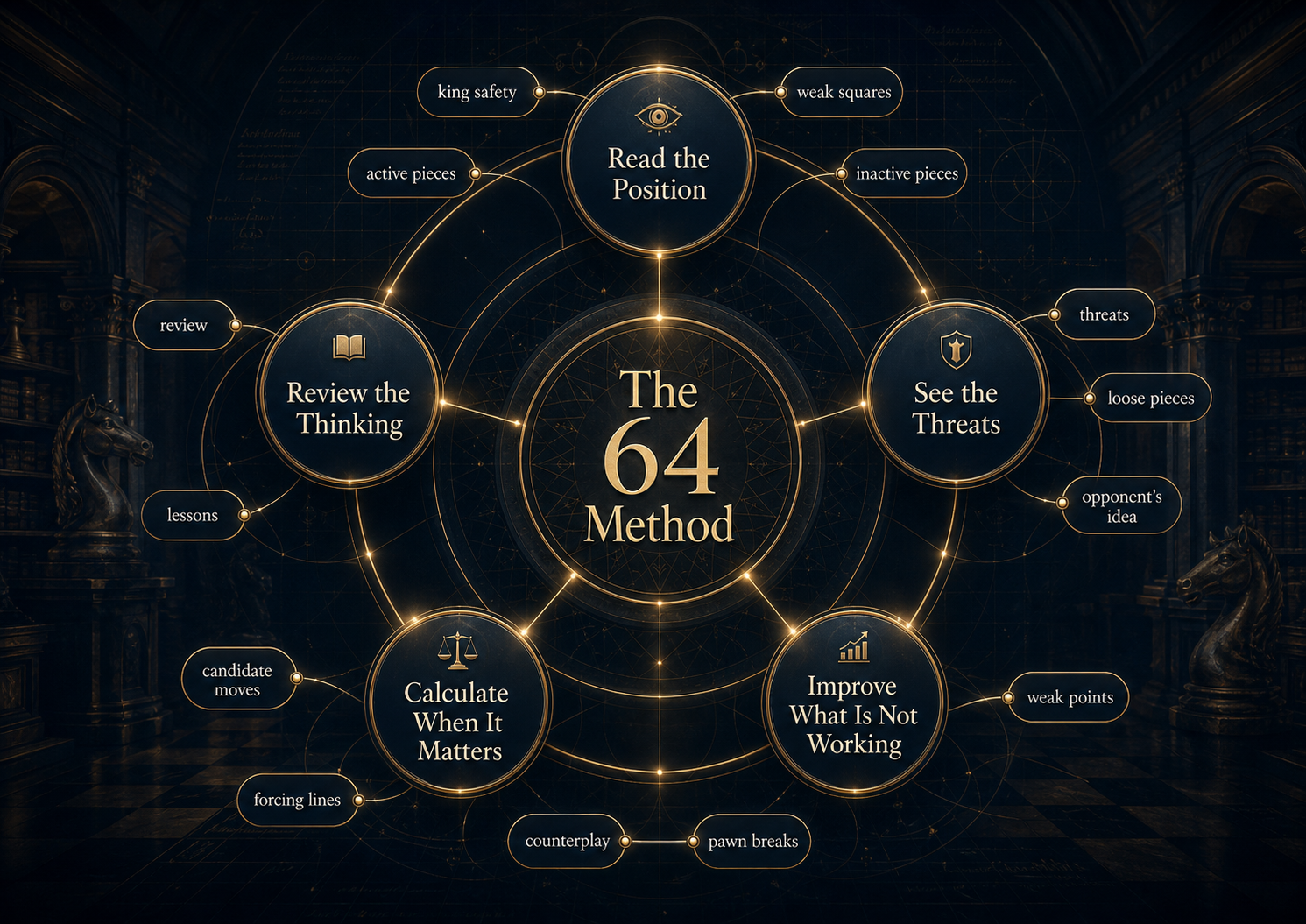
The 64 Method teaches students to slow the position down, separate what matters from what only looks tempting, and make decisions in the right order.
Read the Position
Before choosing a move, students learn to understand what the position is really about: king safety, active pieces, weak squares, pawn breaks, loose pieces, or an immediate threat.
See the Threats
Before searching for their own plan, students learn to respect the opponent’s ideas: checks, captures, threats, and the move the opponent is trying to play next.
Improve What Is Not Working
Not every good move is dramatic. Often the best move improves an inactive piece, removes a weakness, stops counterplay, or prepares the right break.
Calculate When It Matters
When the position becomes sharp, students learn to compare candidate moves, calculate forcing lines, and test their idea against the opponent’s best reply.
Review the Thinking
Every game leaves evidence. We study not only where the move went wrong, but where the thinking went wrong: what the student missed, rushed, feared, or misunderstood.
How Classes Work
What happens inside a class?
Every class has a clear purpose. Depending on the student’s level, the session may focus on a key idea, a practical position, or mistakes from recent games — but the aim is always the same: to improve how the student thinks before moving.
Learn One Key Idea
Each class focuses on one useful chess idea: a plan, endgame theme, opening principle, or thinking habit.
Think Through Positions
Students are trained to explain threats, candidate moves, plans, and the opponent’s most probable reply before choosing a move.
Review and Practice
Mistakes are discussed, doubts are cleared, and the student gets a small practice task so learning continues after class.
For Parents
Chess should build discipline, not just become more screen time.
Society of 64 is for parents who want their child to learn chess with patience, structure, and guidance. The goal is not pressure. The goal is better thinking, one class at a time.
Society of 64 Journal
Chess guidance for parents and students.
Practical chess guidance for parents and students, including chess readiness, beginner learning, online safety, screen fatigue, neurodivergent learning, calculation, blunder reduction and structured improvement.

Parent Guide
Can Chess Help Autistic Children?
A careful parent guide to benefits, challenges, coaching fit, and realistic expectations for autistic children learning chess.
Read Article →

Learning Path
Can a Child Learn Chess Without a Coach?
An honest parent guide to self-learning, apps, books, plateaus, and when coaching actually helps.
Read Article →

Online Learning
How Online Chess Classes Avoid Screen Fatigue
How structured online chess lessons keep children active, engaged, and thinking instead of passively watching.
Read Article →

Online Safety
How Safe Are Online Chess Classes for Children?
Ten practical checks parents should make before enrolling a child in online chess classes.
Read Article →

Coach Selection
How to Choose the Right Online Chess Coach for Your Child
A parent checklist for choosing a coach who teaches with structure, patience, and clear feedback.
Read Article →
Coaching Method
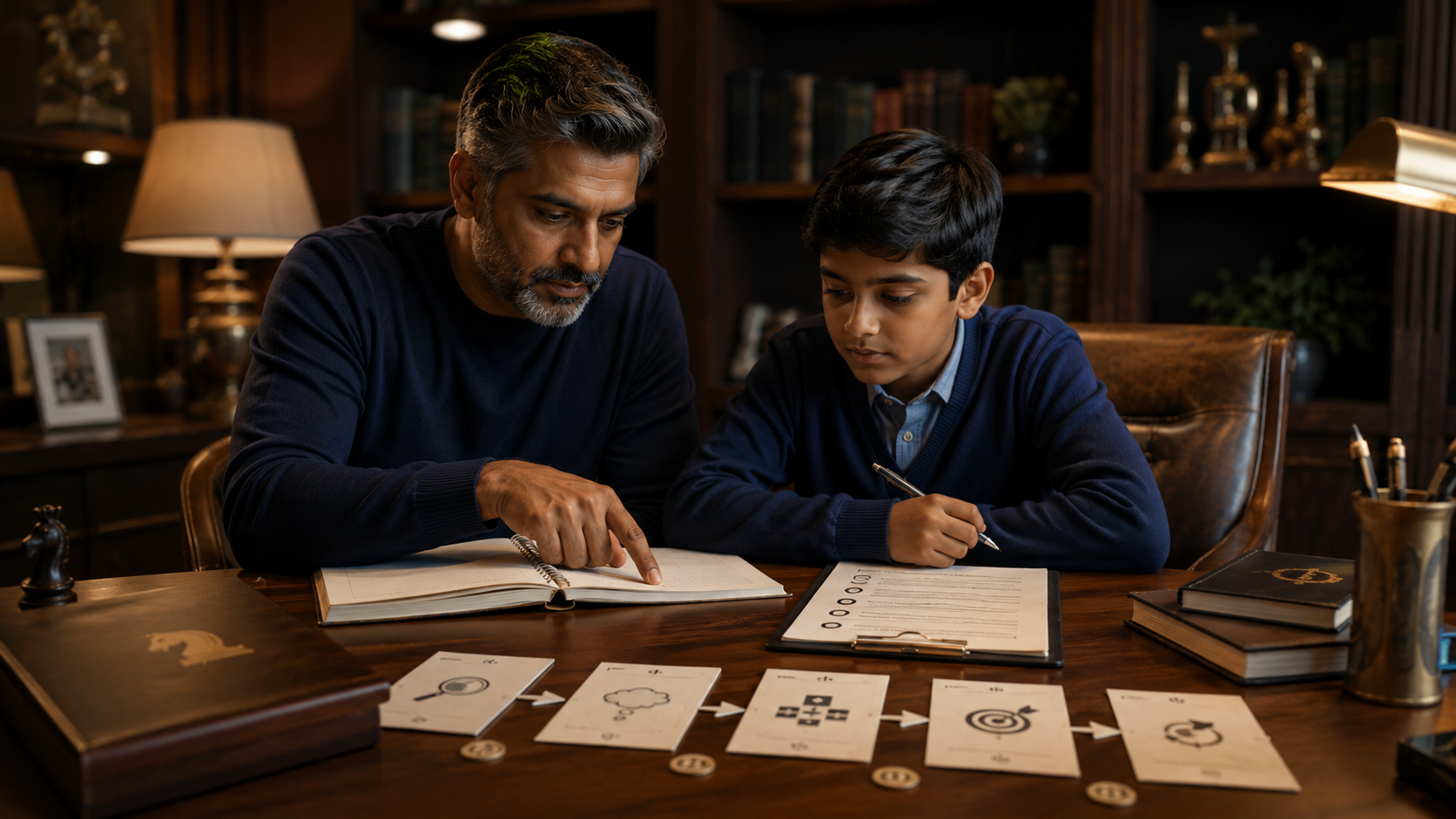
How Does Structured Online Chess Coaching Work?
A clear explanation of what happens inside a structured online chess class and how children improve.
Read Article →
Progress
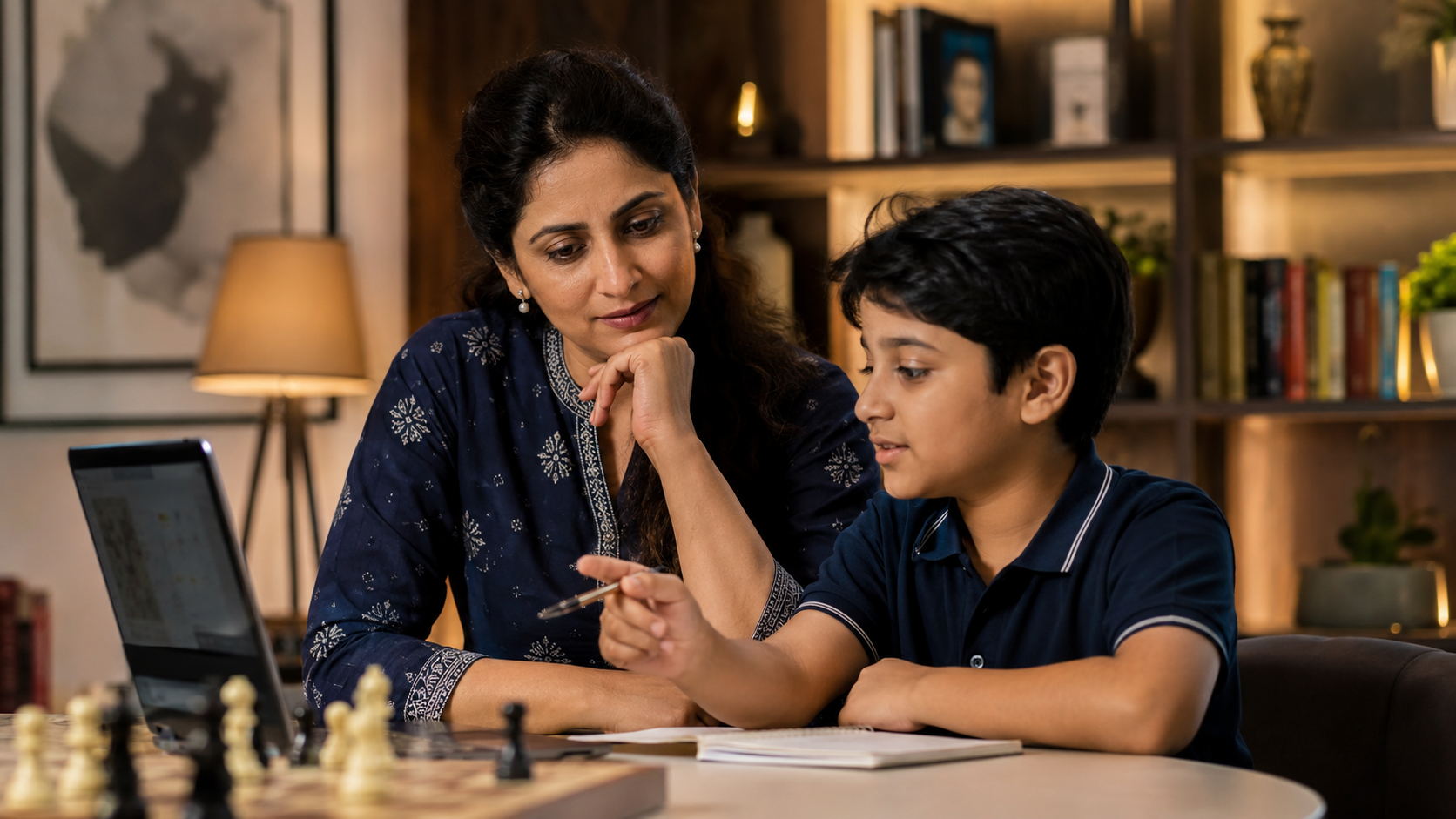
How to Know If Your Child Is Improving at Chess
Practical signs parents can look for beyond wins, trophies, and rating changes.
Read Article →

Comparison
Online Chess Coaching vs. YouTube
An honest comparison of passive chess videos and live structured coaching for children.
Read Article →

Beginner Improvement
Why Beginners Keep Making the Same Chess Mistakes
Why repeated blunders happen, and how structured thinking helps students improve through better habits and review.
Read Article →
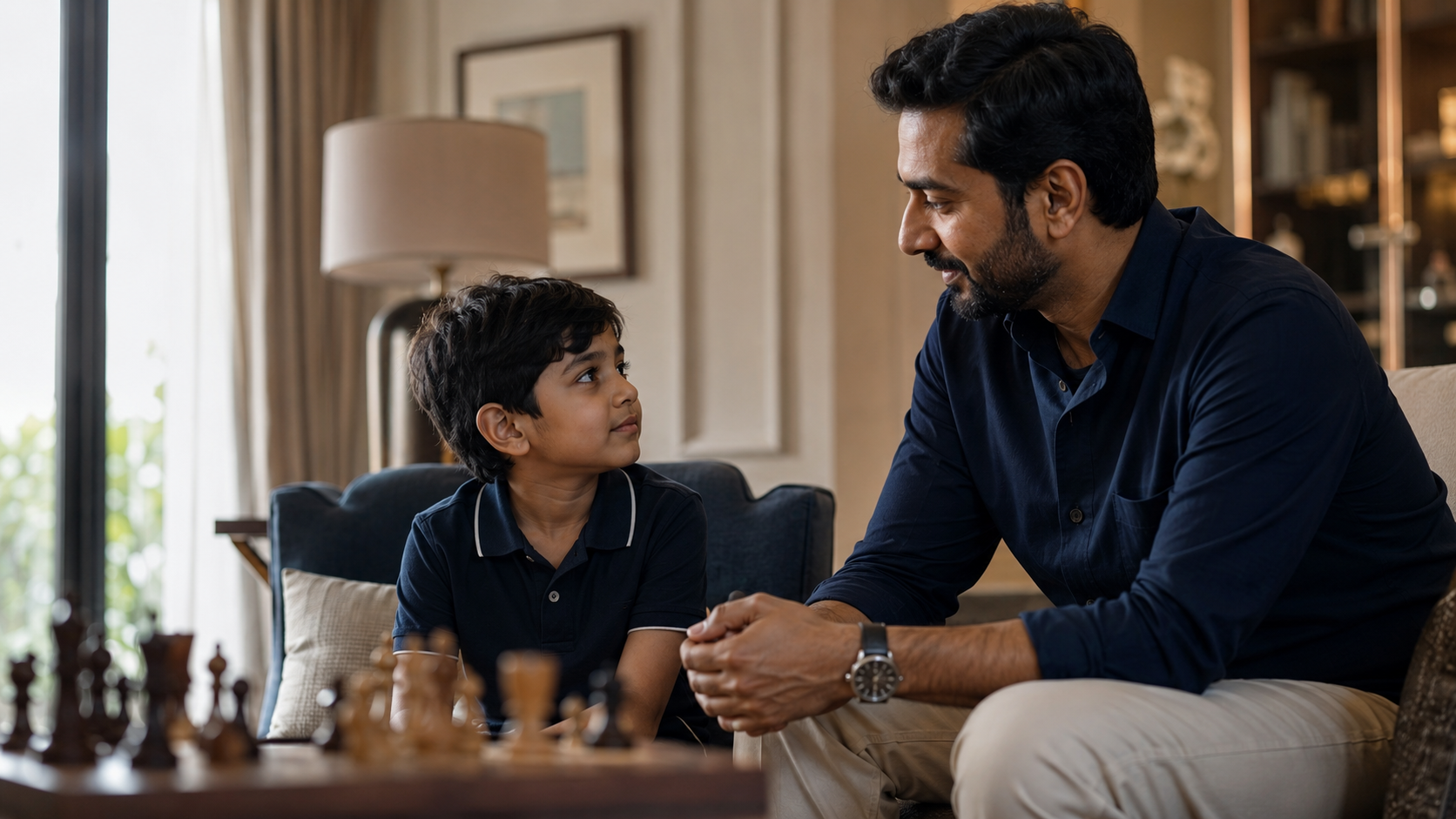
Starting Chess
What Age Should Children Start Learning Chess?
A parent-friendly guide to the right age, signs of readiness, and how to start gently.
Read Article →
Questions Parents Usually Ask
Before you book a trial.
What is Society of 64?
Society of 64 is a chess coaching academy for kids, students, and adult learners. The academy helps learners calculate better, reduce mistakes, understand plans, and make stronger decisions over the board.
What is The 64 Method?
The 64 Method is our chess training framework: read the position, see the threat, improve what is not working, calculate when it matters, and review the thinking after the game.
Is Society of 64 only for kids?
No. The academy is suitable for kids, students, and adult learners. The coaching format depends on the learner’s level.
Do beginners need to know chess before joining?
No. Beginners can start with foundation classes where the basics are taught step by step.
Are classes available online or offline?
Society of 64 currently offers live online chess coaching and may offer offline coaching depending on learner location, coach availability, and schedule.
What does Society of 64 teach?
Society of 64 teaches chess fundamentals, tactics, calculation, planning, positional understanding, game review, opening confidence, and better decision making over the board.
What coaching options are available?
Society of 64 offers small group chess coaching for structured learning at an accessible fee and 1-to-1 chess coaching for personal attention, game review, and direct feedback.
Do you offer 1-to-1 coaching?
Yes. 1-to-1 coaching is available for students who need personal attention and direct game review.
Why is group coaching more affordable?
Small group coaching allows students to learn in a structured format while keeping the fee accessible.
How much do chess classes start from?
Small group chess coaching starts from ₹300 per student. 1-to-1 chess coaching starts from ₹900 per session, depending on the learner’s level and coaching requirement.
How do I start?
Share your name and WhatsApp number, or email us directly. We will respond with trial options, batch availability, and fees.
Book a Trial
Interested in chess coaching?
Share your details and we will send trial options, batch availability, and fees. You can message on WhatsApp or reach us by email.