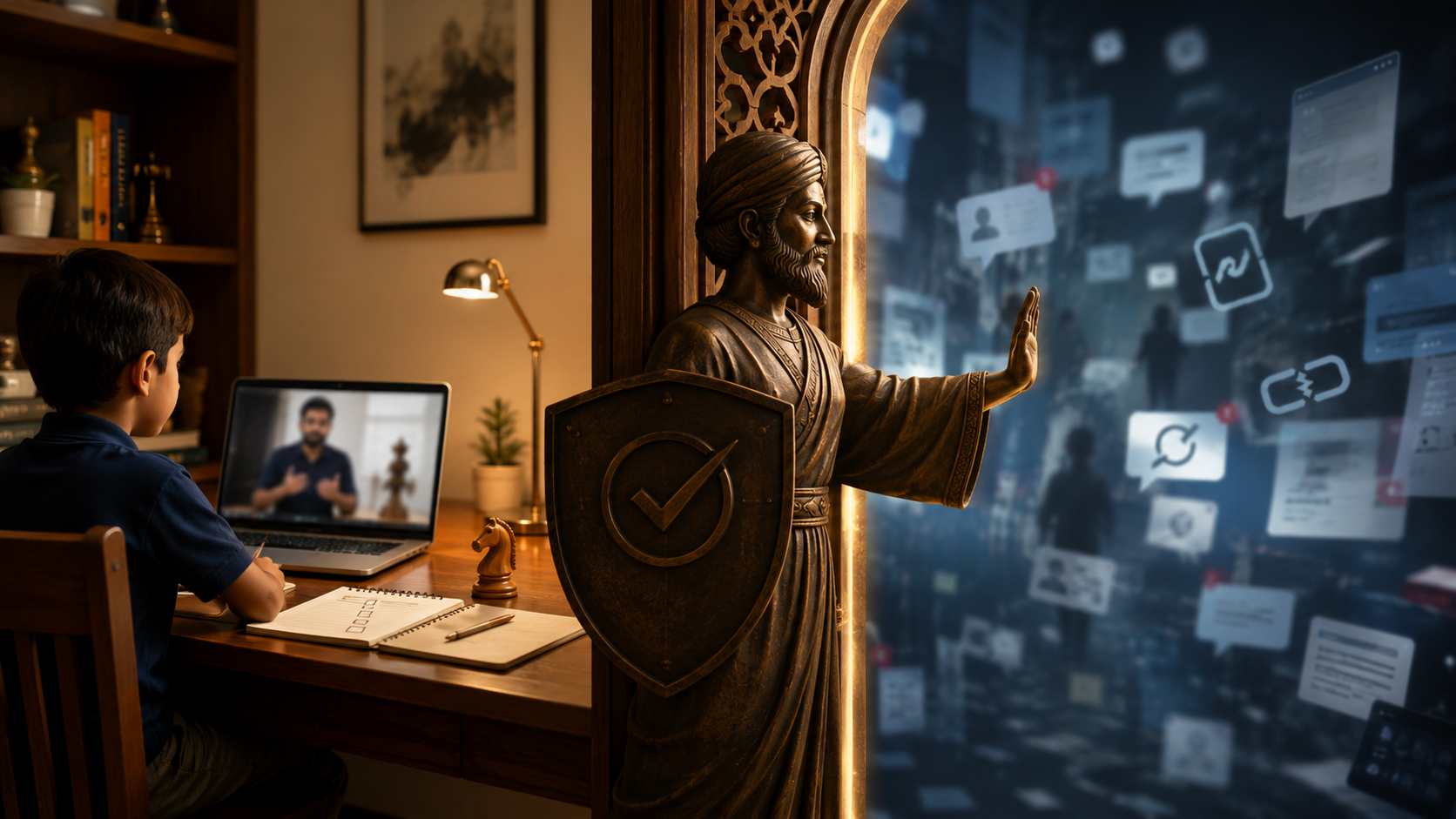
The real concerns parents have
Parents who ask whether online chess classes are safe are usually not worried about chess itself. They are thinking about the fact that their child may be in a live video lesson with an adult they have never met in person.
That concern is valid. It applies to any online educational service where a child interacts directly with a tutor, coach, or instructor. Chess just happens to be the activity.
The goal is not to create fear. The goal is to help parents ask the right questions before enrolling. A responsible provider should make those questions easy to answer.
What makes an online chess class safer?
Safety comes from a combination of clear boundaries, parent visibility, professional conduct, appropriate lesson structure, and careful handling of communication and data.
This article is a practical parent checklist, not legal advice. Laws and screening processes vary by country, so parents should ask each academy what process they follow in their own operating context.
10 things to check before you enroll your child
You do not need to be a chess expert to evaluate safety. You only need to ask clear questions and pay attention to how directly the academy answers.
Check 1
Does the academy explain its child-safety process?
A responsible online chess academy should be able to explain how lessons are conducted, how parents can raise concerns, and what boundaries exist between coach and student. This does not always need to be a long legal document, but the process should not be vague.
Check 2
How are coaches verified before teaching children?
Ask how the academy verifies coach identity, experience, references, and suitability for working with young students. The exact process differs by country, but a trustworthy provider should answer calmly and specifically.
Check 3
Can parents observe lessons?
A parent should be able to observe a child’s online lesson, particularly in the first few weeks. For younger children, parent visibility is both a comfort factor and a safety safeguard.
Check 4
Are lesson recordings handled with consent?
Some academies record sessions for review and accountability. If sessions are recorded, parents should be told clearly, consent should be taken, and storage/access rules should be explained.
Check 5
Is the lesson setup structured and parent-approved?
The class should happen through a predictable, parent-approved setup. Whether the academy uses a video-call tool, chess platform, or shared board, the parent should know how the lesson will be conducted before the first class.
Check 6
How is communication handled outside class?
For children, direct private communication with a coach should be avoided unless a parent is included or has clearly approved the arrangement. Parent-approved communication channels are a basic safeguard.
Check 7
Is the coach suitable for teaching children?
A strong chess rating is useful, but it is not enough. Ask about teaching experience, patience with children, ability to explain simply, and how the coach handles mistakes or frustration.
Check 8
Does the academy collect only necessary information?
Most academies need the child’s name, age, parent contact details, and payment details. If additional information is requested, such as school name, address, photos, or recordings, ask why it is needed and how it will be stored.
Check 9
Is there a trial session before commitment?
A trial class lets parents observe the coach’s teaching style, communication tone, lesson setup, and whether the child feels comfortable. Use the trial actively rather than treating it as a formality.
Check 10
What happens if something feels wrong?
Before enrolling, ask who to contact if you have a concern, how quickly concerns are handled, and what the cancellation or rescheduling policy looks like. A serious provider should not make these answers difficult to find.
A note on screen time
Some parents asking about online chess safety are also thinking about screen time. A structured live chess lesson is different from passive scrolling or unmonitored video watching.
A good lesson involves active thinking, conversation, problem solving, and feedback. The child is not simply consuming content; they are being asked to reason, explain, and respond.
That said, if your child already has a heavy screen schedule, it is sensible to look at total daily usage across schoolwork, entertainment, games, and coaching.
How Society of 64 approaches child safety
Society of 64 is built around structured, parent-visible coaching. In the current founder-led model, parents know exactly who is teaching their child and can observe how the lesson is conducted.
For young students, communication should remain parent-approved and transparent. Parents are welcome to observe trial sessions, ask questions, and decide whether the learning environment feels right for their child.
As Society of 64 grows, coach verification, parent visibility, and clear communication boundaries remain part of the operating standard. The goal is not only to teach chess, but to create a serious, safe, and trustworthy learning environment.
If you want to see how a lesson feels before committing, a demo class gives you the chance to observe the structure, the teaching tone, and the way your child responds to the coach.
Related reading
If you are still comparing coaching options, read our guide on
how to choose the right online chess coach for your child
.
If you want to understand what happens inside the class itself, read
how structured online chess coaching works
.
Trial Class
Want to see the learning environment before enrolling?
Book a demo class with Society of 64. You can observe the lesson, see the coaching structure, and decide whether the environment feels right for your child.
Book a Trial Class →