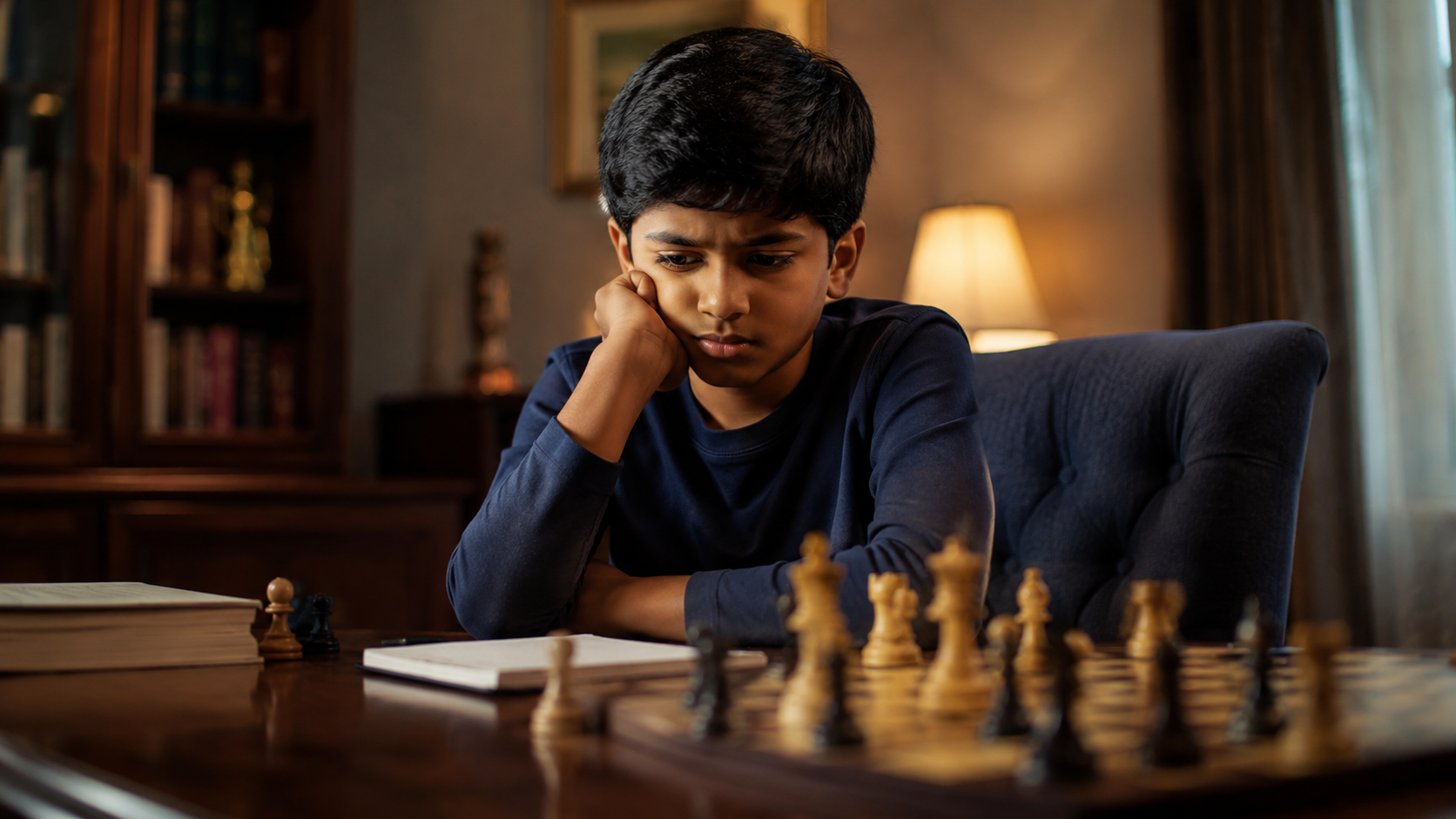
Why repeated mistakes happen in chess
Chess improvement is not only about learning new ideas. It is about changing the decision-making habit before every move. Many beginners play a move because it looks active, gives check, attacks something or feels familiar. They often do not stop long enough to ask whether the move is safe.
This is why the same error can appear again and again. The student may solve a puzzle correctly in class, but during a game they forget to apply the same discipline. The problem is not knowledge alone. The problem is transfer.
Common mistakes beginners keep repeating
Most repeated mistakes fall into a few predictable patterns. Once a coach identifies the pattern, the student can begin training the exact thinking habit that is missing.
Why puzzles alone do not fix the problem
Chess puzzles are useful. They teach patterns such as forks, pins, skewers, discovered attacks and checkmates. But a puzzle already tells the student that something tactical exists. A real game does not give that warning.
In a real game, the student must first notice that the position is critical. They must ask whether there is a threat, whether a piece is loose, whether the king is vulnerable and whether the opponent has a forcing reply. That awareness is trained through guided positions and game review, not only by solving more puzzles.
The hidden issue: the student reviews the result, not the thinking
Many beginners look at a lost game and only remember the final blunder. But the final blunder is often not the real cause. The real cause may have appeared five moves earlier: a rushed trade, a missed threat, a weak square, an undeveloped piece or a plan that ignored counterplay.
Good review asks a deeper question: where did the thinking go wrong? Did the student miss the opponent’s idea? Did they calculate only their own move? Did they choose a move because it looked natural without comparing alternatives?
A simple thinking checklist for beginners
Beginners do not need a complicated grandmaster system. They need a short routine that they can remember before every move.
✓ What is my opponent threatening?
✓ Are there any checks, captures or forcing moves?
✓ Is any piece undefended or overloaded?
✓ Which piece is worst placed?
✓ What happens if my opponent finds the best reply?
How Society of 64 trains students to stop repeating mistakes
Society of 64 uses The 64 Method to help students slow the position down. The aim is not to make the child afraid of mistakes. The aim is to help the child understand the position before choosing the move.
In class, students are trained to read the position, see the opponent’s threat, identify candidate moves, calculate when the position demands accuracy and review the thinking after the game. Over time, the student stops guessing and begins making decisions with structure.
The goal is not perfect chess. The goal is cleaner thinking.
Beginners will still make mistakes. That is normal. But the quality of mistakes should improve. A random blunder should become a small miscalculation. A careless queen loss should become a missed defensive resource. A rushed move should become a move chosen after real comparison.
That is how chess progress becomes visible: not because the child suddenly stops losing, but because the same old errors begin to disappear.
Trial Class
Want to understand your child’s repeated chess mistakes?
Book a free demo class with Society of 64. The first session helps identify the student’s current habits, common mistakes and the thinking process they need to build next.
Book a Trial Class →