
Society of 64 logo

SOCIETY

OF 64

Book a Trial
← Back to Journal

Parents Guide

What Age Should Children Start Learning Chess?

Parents ask this question a lot. Sometimes the child has shown interest in a chess set and the parent wants to act before the moment passes. Sometimes a friend mentioned chess is good for kids and now there is a quiet worry about having missed the window.

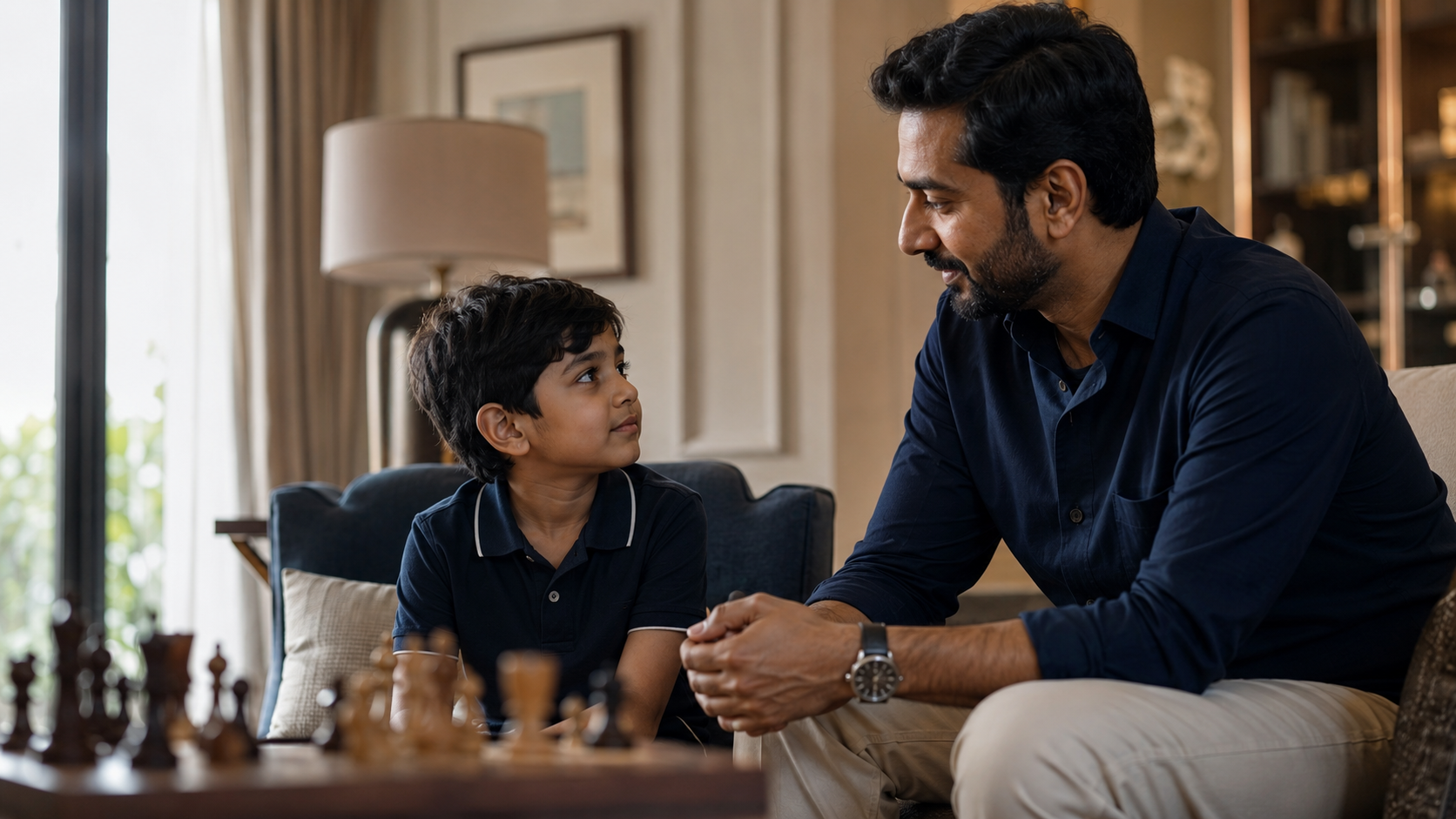
Indian parent and child discussing chess readiness in a calm home learning environment
The right age to start chess depends less on the calendar and more on the child’s curiosity, focus and readiness for guided learning.

Short Answer

Children are generally ready for structured chess learning between ages 5 and 7.

But readiness matters more than age. A 6-year-old with no patience for sitting still may struggle, while a thoughtful 9-year-old starting chess for the first time can have an excellent experience. Formal coaching works best once the child can process feedback, follow basic rules and stay engaged long enough to think.

What research says about chess and child development

Studies from countries that have brought chess into school curricula show consistent improvements in logical reasoning, mathematical thinking and reading comprehension. The benefits appear when children are taught to think through positions, not when they simply play games and hope improvement follows.

Chess builds skills such as holding multiple possibilities in mind, thinking about consequences before acting and managing frustration after a mistake. These abilities become more accessible for most children between ages 5 and 8. Pushing before that window can create resistance rather than progress.

Signs your child is ready for chess lessons

Rather than looking only at the calendar, look at the child. Genuine curiosity is a better predictor of early progress than any age milestone.

Can follow rules in other games without constant reminders
Can focus on one activity for at least 20 minutes
Shows curiosity about chess instead of being forced into it
Can handle losing without becoming completely discouraged
Asks questions, wants a rematch, or notices chessboards and pieces

What happens if you start too early?

Starting too early does not usually create bad chess habits. What it can create is a negative association with the game. A 4-year-old placed in front of a board before they have the cognitive tools to understand it may feel confused and frustrated.

Keep early exposure light and child-led. Introduce the pieces as a curiosity. Play simple games with no pressure attached. Once the child is asking for more, structured coaching starts to make sense.

How online chess classes are designed for different ages

Good online chess coaching is not the same at every age. How a coach works with a 5-year-old is genuinely different from how they work with a 10-year-old, and both differ again from how they approach a teenager.

Ages 4–5

Foundation and fun

At this stage, chess should remain light. The child can learn the names of pieces, enjoy simple movement games and build a positive connection with the board.

Ages 6–8

The sweet spot for structured learning

This is often the strongest window for beginning structured lessons. Most children can follow rules, sit through a short class and begin understanding cause and effect.

Ages 9–12

Tactical development phase

Children starting at this age can catch up quickly. They usually have better focus, absorb tactical patterns faster and can begin serious practice with the right guidance.

Ages 13+

Still a strong starting point

Teenagers have real advantages: stronger abstract reasoning, independent study habits and the ability to understand strategy more deeply.

At what age did India’s top chess players start?

Viswanathan Anand learned chess at 6. Praggnanandhaa was introduced to chess at 5, with formal coaching around 7. D. Gukesh began serious training at 7 and became a grandmaster at 12.

The pattern is clear: early introduction between ages 5 and 7, followed by structured coaching. None of them needed pressure the moment they touched a piece. Their first chess environment gave the game space to become interesting before it became serious.

How to take the first step with Society of 64

The best starting point is not finding the perfect age or perfect curriculum. It is finding out where your child actually stands. Society of 64 builds coaching around The 64 Method: read the position, identify threats, calculate options and make a decision.

A demo class is the simplest next step. Your child plays, the coach watches, and by the end you get a clearer sense of their current level and what realistic progress looks like.

Trial Class

Not sure if your child is ready?

Book a free demo class with Society of 64. The first session helps assess your child’s level and recommend the right starting point.

Book a Trial Class →

FAQ

Frequently Asked Questions

Can a 4-year-old learn chess?

A 4-year-old can learn the pieces and enjoy simple games informally. Structured coaching works better from age 5 or 6 onward, when concentration and sequential reasoning are more developed.

Is 10 too old to start learning chess?

No. Age 10 is a genuinely good time to start. Children at this stage have strong focus, absorb tactical patterns quickly, and can reach a competitive level within a year or two of consistent work.

How long does it take a child to learn chess basics?

Most children learn the rules and piece movements within 4 to 6 sessions. Playing with genuine understanding develops over the following 2 to 3 months of regular practice.

Should I enroll my child in group or individual chess classes?

Group classes work well for building comfort and a social learning environment. Individual coaching gives the coach direct visibility into the child’s specific mistakes, habits and thinking patterns.

How are online chess classes adapted for young beginners?

Sessions for young beginners are shorter, visual and interactive. A good online coach adjusts the pace based on the child’s attention rather than following a fixed script.