Why this question matters more than parents realise
Most parents asking this question are not trying to avoid spending money. They are trying to spend it wisely. That is the right instinct. A child who is still learning how the pieces move does not always need paid coaching immediately. Free videos can help build early familiarity.
But a student who already understands basic chess and still keeps losing the same way is facing a different problem. They do not need more general information. They need someone to see how they think during a real position.
What YouTube chess content is actually good for
YouTube is genuinely useful for introducing chess. It can explain how pieces move, what castling is, what checkmate means and how simple tactics work. For parents with no chess background, it can also help them understand the language of the game.
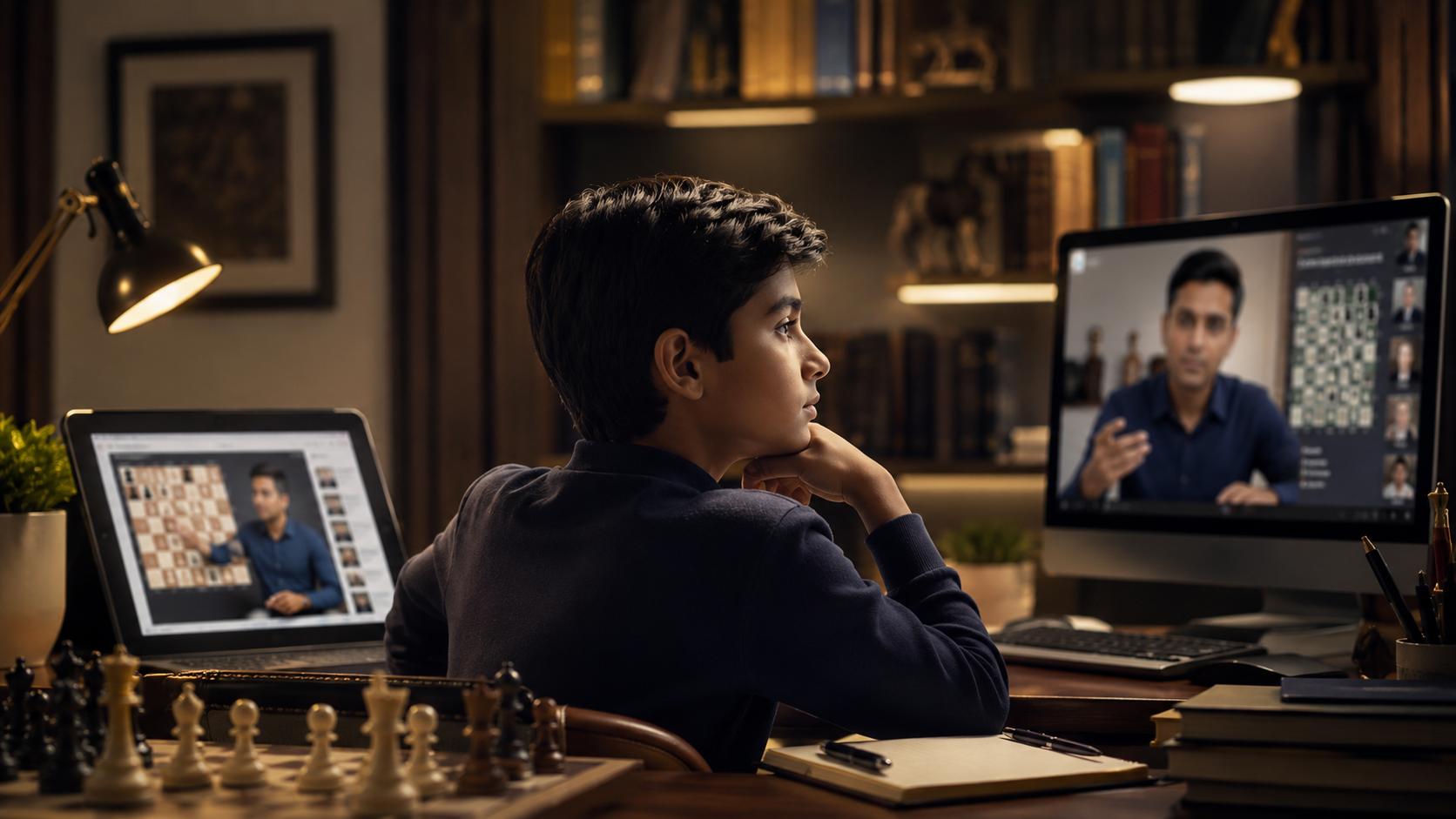
YouTube can also support coaching. A student may watch a video on basic endgames, opening principles or famous games after a coach has already introduced the topic. In that case, videos extend learning rather than replace it.
Where free videos fall short
Watching chess instruction is passive. A child can watch ten videos about controlling the centre and still play the first five moves of a game without any clear plan. The concept may make sense on screen, but applying it in their own games requires active practice.
A YouTube video cannot see that your child moves the queen out too early, forgets to check threats, rushes in winning positions or never reviews losses properly. A coach can identify these patterns within a few sessions.
What structured coaching provides that videos cannot
A coach watches what the child actually does, not only what they understand in theory. When a student makes a move, the coach can ask why. The explanation reveals whether the right thinking process was used.
This is where improvement begins. The coach can correct the habit behind the mistake, not just the move itself. Over time, the student learns to read the position, identify threats, compare candidate moves and calculate before acting.
Game review is the missing bridge
Many children watch chess videos and feel they understood the lesson, but their games do not change. Game review creates the bridge between theory and performance. The student sees where the position changed, where the wrong assumption entered, and where the decision process broke down.
Reviewing the student’s own games is more memorable than watching someone else’s mistakes because the lesson is personal. The student remembers the position, the emotion and the moment of decision.
How to decide what your child needs now
The right choice depends on the child’s stage. YouTube is not the enemy. It is simply not designed to observe, diagnose and correct one student’s habits.
How Society of 64 approaches this honestly
Society of 64 does not take the position that YouTube is useless or that every child needs coaching from day one. Free learning can be a good starting point. But once the child is past the basics and wants to genuinely improve, structured coaching is usually a more direct route.
The 64 Method is built around developing the thinking process that reveals itself in the gap between watching chess and playing chess. Students learn to read the position, identify threats, calculate options and then choose the move in that order.
If you are unsure whether your child is ready for coaching, a demo class can answer that quickly. The coach watches your child play and gives you an honest read on their current level, repeated mistakes and next training priority.
Trial Class
Curious what structured coaching looks like in practice?
Society of 64 offers a demo class where you can see The 64 Method in action. No pressure, no commitment — just a clearer view of whether coaching is the right next step.
Book a Trial Class →